Sunday, February 10, 2008

The tribal morality of the Bible.
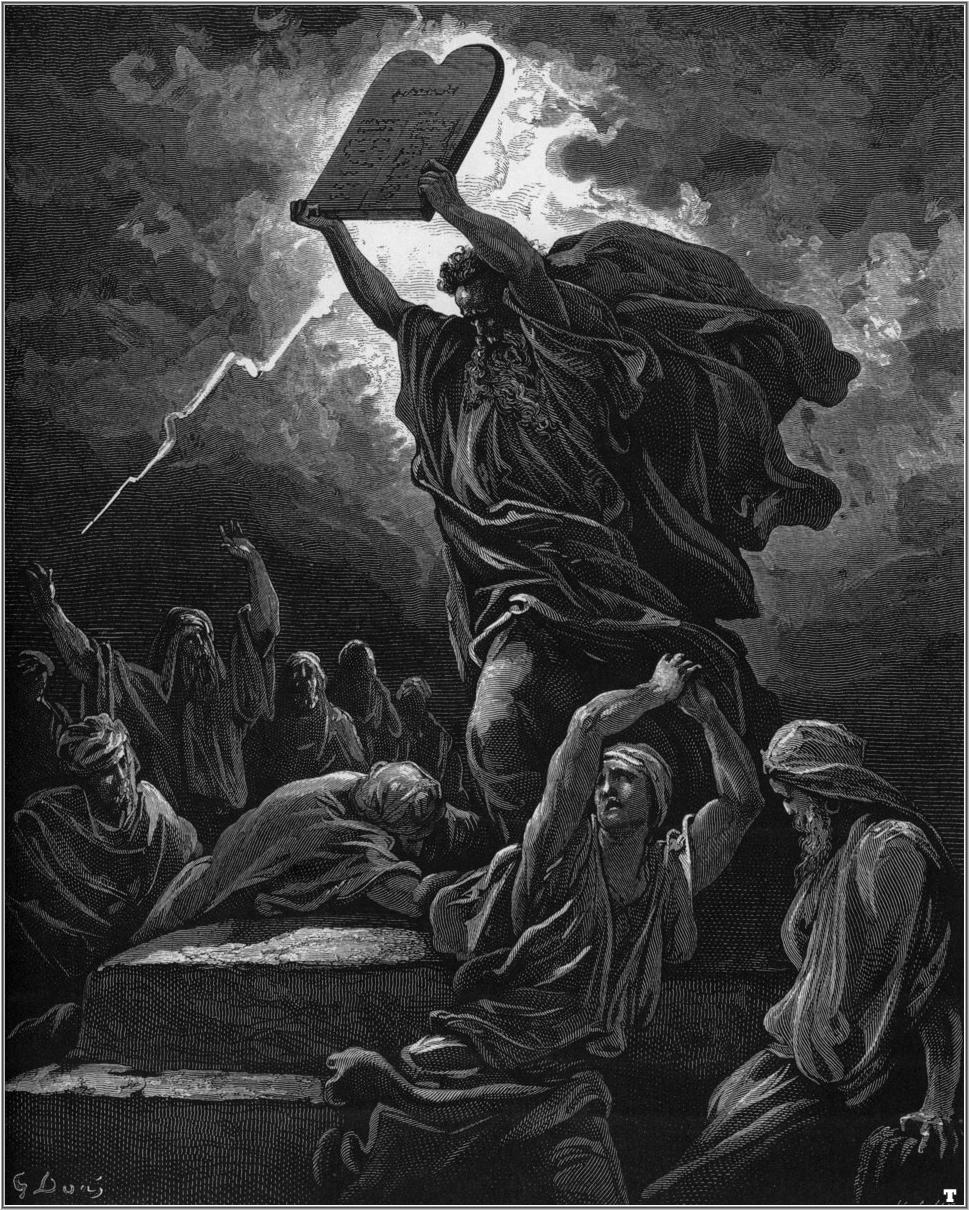
The morality of the Bible, especially the Old Testament, confuses people. They don’t understand how God could, on one hand command people not to murder and then order them to kill. He forbids fornication and adultery and then turns over young girls to the men of Israel for their pleasure. He says: “Thou shalt not steal” and then orders the wholesale plunder of entire communities.

The atheist has one simple answer. The Bible wasn’t written by a deity at all but by men and the morality of the Bible reflects the morality of the men of those days. That is one thing that escapes people. Never did the Bible make a giant leap in the realm of morality. It was never any better than the men who lived at the time it was written.

Throughout the world, during the period that the Bible was written, slavery was common. And nowhere does the Bible condemn it. On the contrary it is, in some cases, ordered by the alleged Deity behind the book. He sanctions slavery. The Bible is unusually silent about child rape. A point one minister in New Zealand used in his own defense when he admitted to attacking small girls sexually. He said the Bible never forbade what he did -- and it didn’t. At every point in its existence the Bible reflected the values of the society around it.

Yet, you would think that a god, sending his word to man, could have done better than that. He didn’t forbid war but encouraged it. He didn’t recognize women as man’s equal but as his subordinate and property. Even the New Testament, written during a period when civilization, under the Greeks and then Romans had made some advances, is unable to surpass the common morality of the day. The best that it can offer in the way of slavery is to tell masters to treat their slaves well and to tell slaves to obey their masters. Apparently it never dawned on God, or his alleged son, to say: “Masters, free your slaves.”

For the most part the followers of Jesus saw nothing wrong with enslaving other human beings for centuries. Only as the culture began to change, following the unchristian Age of Enlightenment, did believers in any significant number become opponents of slavery. And even then it was the more orthodox believers who defended this crime and more liberal, or deistic, types who opposed it.

The morality of the Bible, and the church I think, rarely led humanity. It followed. As morality evolved the morality of the Bible changed. Ditto for the church.

The thing to understand about Biblical morality is the reason behind the double-standards of the Old Testament. The Hebrews were a tribe and they had a tribal mentality. So, of course, the deity that invented also had a tribal mentality. And that means there are rules for within the tribe and rules for outside the tribe.

Jehovah’s edict “thou shalt not kill” was a rule for within the tribe -- for the most part. He did make some exceptions which I will discuss momentarily. Where genocide was commanded it was against other tribes. The rules that the made-up god of the Hebrews spoke about were fundamentally rules for a people who had to live in relative close proximity to one another, who were related to one another, and who faced an existence of very limited resources in a harsh climate.

But when it came to other tribes then the rules were chucked out the window. That is typical tribal thinking. In the primitive economies of the day man produced very little and the region could be harsh and demanding. Every other tribe was a threat because their sheep or goats would eat the limited grass available and that means your sheep wouldn’t eat. If they drank the well dry you thirsted. Every other tribe was a threat merely because it existed. So the god of the Israelites was regularly ordering them to conquer, kill, plunder and spoil.

Even when this Jehovah fellow commanded the execution of Hebrews, for various sins, it was primarily to keep the peace within the tribe. In a world of tribal warfare each tribe must remain united or fact extinction. Life was a constant battle. There could be no tolerance for diversity in such primitive conditions. In addition to cohesion the tribe needed to remain strong and to outgrow competing tribes.

Jehovah wanted homosexuals within the tribe killed. Other than knowing nothing about sexual orientation, a relatively modern concept, the main reason to execute such people was because sexuality that didn’t lead to reproduction threatened the tribe. If it didn’t out-populate competing tribes in the region it could be wiped out.

Thou shalt not kill was necessary within the tribe for the tribe to survive. Killing others, outside the tribe, was seen as necessary for the same reason. Moral rules against adultery were necessary to keep harmony within the community. The men were the warriors who had to protect the tribe. If they hated one another, or wished to harm one another, it weakened the tribe and made them more vulnerable. Thou shalt not steal was a rule within the tribe so that there wouldn’t be divisions within the community. Again when it came to those outside the tribe, Jehovah was quick to recommend massive theft of the land, crops, and livestock of the tribes that his people slaughtered.

The Hebrews argued that they were a “chosen people”. And the moral code we see in the Ten Commandments (flawed though they may be) were a code for the tribe. Jehovah didn’t give a flying fuck about the other tribes. Kill them. Slaughter every man, woman and child, he said. In particularly vindictive moments he supposedly commanded that their livestock be killed as well -- though often he simple said to steal it.

If the Hebrews were “chosen” what does that say about everyone else? They were not chosen. In other words, they were rejected. They weren’t part of the tribe. And thus the moral codes of the tribe treated them differently than it treated tribe members.

Jehovah was the sock-puppet of the Hebrews of that day. He was a sad and rather pathetic god in that he had no moral grandeur at all. His morality was the morality of a backward, violent tribe.

In the New Testament man had moved somewhat beyond the tribal mentality. There were great trade routes and concepts of law established by the Greeks and the Romans. And these laws were seen as applying to all men equally. The ethics of Jesus reflected that reality. Instead of being as tribal as the Hebrews he spoke of treating others as you would be treated. This sort of reciprocity was necessary in a world of trade and exchange.

And while the Romans and the Greeks both moved humanity ahead in some important ways they also failed. They never saw the evil that is inherent in human slavery. And neither did Jesus. For once again, the New Testament, like the Old, never managed to go beyond the morality of the day. It didn’t do so because it was the work of the men of those days and not the writings of the some divine lawgiver.

Labels: ,

Sunday, March 18, 2007

Life isn't fair.

“Life’s not fair.” That’s a pretty common refrain. What is usually meant by it? Some may assume that this means life is unfair. But that’s not quite right. The term refers to the fact that the process of life itself, if not the movement of the universe, is outside the realm of fair and unfair. Life is not fair, but neither is it unfair.

Fair is a concept describing a relationship which is free from bias, dishonesty or injustice. A game is fair when the rules apply equally to everyone and no one is intentionally disadvantaged. It implies the involvement of conscious, moral beings with the ability to choose.

Rocks don’t have the ability to choose. The planet does not have a consciousness and can’t make choices. An earthquake make start a landslide and kill someone. It is tragic but it outside the realm of fairness entirely. Often when something like this happens someone will say: “Life's not fair.”

The game analogy is a good one. Consider a Little League game where one team is held to one set of rules and the other team to a different set of rules. The first team rounds the bases and scores one point. The second team must round them twice to score a point. The game is rigged. It’s unfair. Someone designed the game so that the one team has a much harder time than the other team. We would call that unfair.

Imagine if the game keeper in that match did something even worse. Instead of biasing the rules against one team he did unpleasant things to them. Let us say he broke the legs of a few of the kids so they couldn’t run well. Maybe he threw acid in the face of others blinding them. Not only is he unfair but cruel.

And life often does that. For entirely natural reasons bad things happen. Genes evolve and mutate and sometimes genes have defects in them. And those defects harm people. They might cause one child to be born grossly malformed or mentally handicapped. Others are born blind.

There are other “accidents of birth” outside the realm of fairness. Some people seem to get all the luck. They are attractive, intelligent and seem to get born into the “right” family so that they have every advantage possible. They never want for money, never lack opportunity to succeed, and always have more options than they could possibly consider. Sure sometimes they screw it up. But they have to work a lot harder to make themselves failures than lots of other people.

Most of us aren’t like that. Most of us aren’t drop dead gorgeous. Most of us aren’t geniuses or born to wealth and privilege. And most of us aren’t the worst off either. We aren’t the people who nature seems to have cursed. We aren’t the people born in families that literally have nothing to speak about. As children we were fed and didn’t famine. We didn’t watch siblings starve to death before our eyes. We didn’t see thugs march our mother into the bush to rape and murder her.

When it comes to what traits we are born with the motto applies: life isn’t fair. When it comes to which families are our own the same is true: life isn’t fair. It grants some great privilege and inflicts on others immeasurable suffering. We look at the privileged and feel cheated and then look on the suffering and and bless our luck.

Life isn’t fair.

But what if there is a game keeper who determines these things? What if there is actually a conscious, moral being, with the ability to choose who makes choices for us? To some he gives wonderful advantages and to others unfathomable misery. He chooses that some are crippled and others great athletes. And then he places them all in the midst of the same world and says: “Go ahead and join the game.” Of course some have no chance at all. He makes sure of that. He sends famine there way to starve them as babies. Or polio to cripple them as children, or AIDS to take there parents from them. He gives them nothing. Others he showers with blessings.

Anyone who designed a “game” like that would not be fair. In fact he would be consider unjust, cruel, and vicious. Our language lacks the proper words to describe the utter immorality of such a being. Such an entity would be the supreme evil if it existed.

If there is a deity who created us as we are then he is responsible for the great blessings on the view and the misery of the many. If he showered some with riches he imposed poverty and famine on others. No child choose to be born in family that was unable to feed it. No child decided to be born to parents who would abuse and murder it. Those were just the random acts of existence. Life isn’t fair.

But once you insert a God into the equation everything changes. Every fact of reality becomes open to moral judgement. Now many theists would try to argue that their deity is not bound by an moral code. He is the lawgiver immune from the law he gives -- much the way George Bush sees himself.

They imagine a being of absolute power who is reigned in by no moral code whatsoever. There can be no morality which binds him other than his own choice. If he is limited in choices he is not all-powerful. He must have the ability to make evil decision. He must have the ability to act immorally. Now I know the theologically inclined don’t want to imagine that a possibility. After all an all-powerful being who is bound by no moral code whatsoever is a terrible thing to consider. So they simply say he either is not able to do evil for some magical reason they don’t quite explain or they say he is able to do evil but always chooses to do good.

How do they know the always does good? In fact if we look around at all those things over which we say “Life is not fair” we get the impression that he may be doing evil quite regularly. He gives an infant deformed legs dooming it to a life of pain and eventual starvation by having it born in the midst of complete poverty. Maybe he did it because he is evil. Maybe he chooses to be unfair, immoral, and monstrous. Perhaps he gets some sadistic joy out of inflicting pain on millions of people much the way some very sick thugs enjoy torturing animals.

The great tyrants apparently found some value in slaughtering people by the millions. Does not these deity do the same? The tsunami that killed hundreds of thousands of people in one day rivals any act by the worst monster in history. Not even Stalin, Mao or Hitler could inflict death on hundreds of thousands of people in just a few hours.


The Christian comforts himself saying this couldn’t be possible because the Bible says that their God is good. But couldn’t a deity capable of monstrous acts, just like those that take place daily, just as easily lie to people to give them false comfort? If there is some divine plan at work when a few hundreds thousand people are killed in a massive tidal wave then there could be a divine place at work when he hands out holy books with lies in them.

Maybe this malicious entity actually did reveal himself to the prophets of the Bible and did tell them the things they wrote down. And maybe he then showed himself to other prophets and told them different things setting these groups against one another for eternity. Maybe he enjoys the conflict his contradictory revelations produce. Would this be any less monstrous than creating famines or plagues?

The choice for the theological inclined is a difficult one I think. They can argue that there is moral code to universe that binds even God. Many have said just that throughout history. But if that is so then there are choices God can not make, his powers are indeed limited by something.

On the other hand maybe there is no deity at all. Maybe life is a series of events, some randomly caused by the forces of nature and others created by human choices interacting with nature. Maybe there are things for which no one is responsible and maybe life really isn’t fair after all. You decide for yourself which is more plausible. I know what I think.

Labels: , , ,


Web Counters Religion Blog Top Sites